
Usage Based Billing

5 Stripe Billing Alternatives Worth Evaluating in 2026

April 27, 2026

If you are processing payments, managing subscriptions, or handling simple invoicing, Stripe's ecosystem is hard to beat for getting up and running fast.

But there are a few specific moments when companies start looking for something else. The first is when pricing model complexity outpaces what Stripe Billing can configure without custom engineering. The second is when usage volumes grow to a point where event ingestion and metering need to be a dedicated system, not a layer bolted onto a payments platform. The third, and most common for AI companies, is when you realize you have no idea whether your customers are actually profitable. Stripe tells you what came in. It does not tell you what went out (cost) to serve each customer.

Stripe built the best payments infrastructure in the world. Billing at the complexity that growing AI products need is a fundamentally different problem, and that is not what Stripe set out to solve.

Here are five alternatives worth evaluating when you reach that point.

1. Amberflo
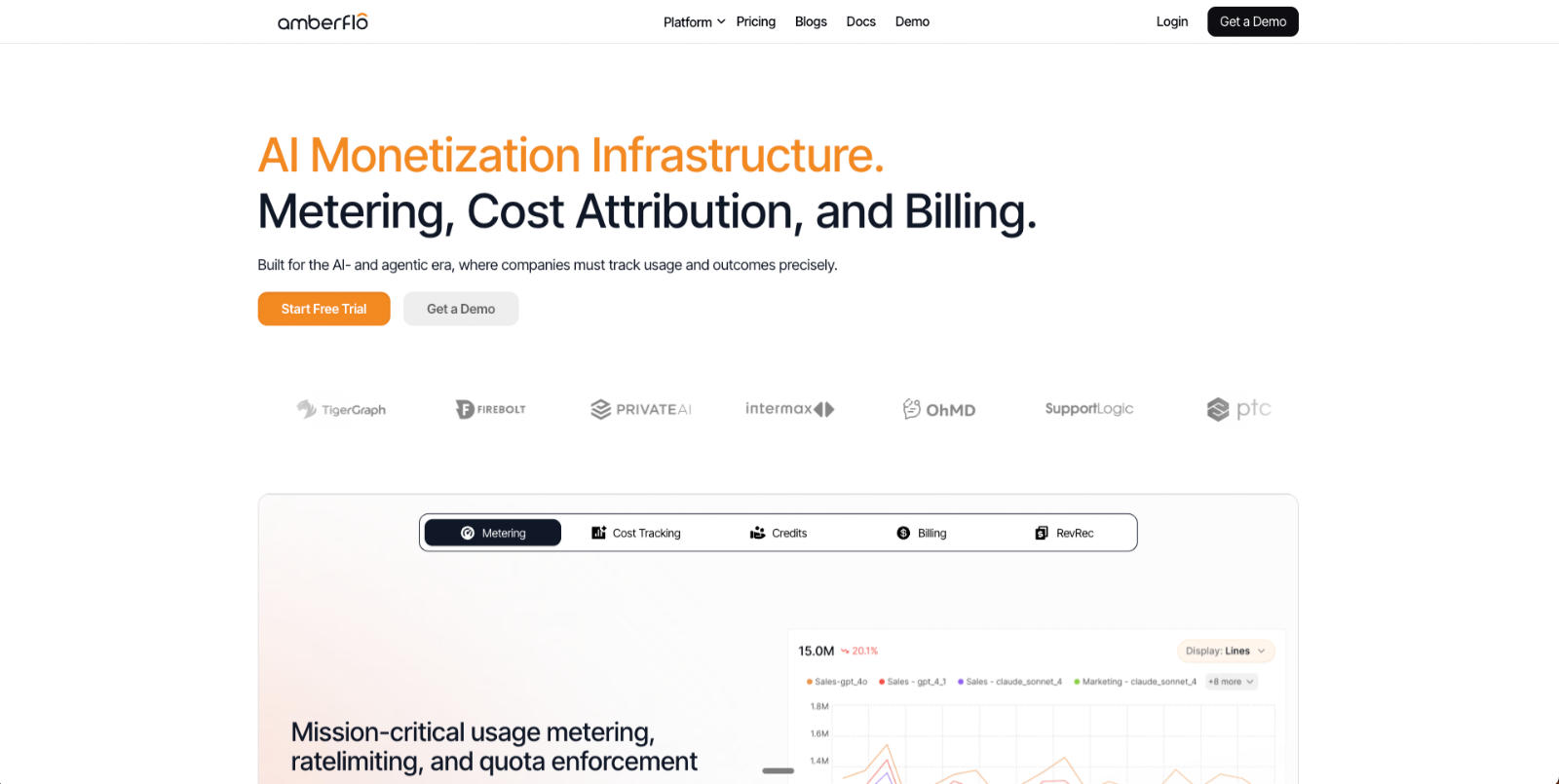
Amberflo is an AI monetization platform, purpose-built for the AI era, converging cost tracking and billing into a single platform. For teams moving off Stripe Billing, the immediate difference is that Amberflo was built around metering first, not payments. Usage data flows directly into billing without custom middleware, reconciliation work, or separate data pipelines. Beyond the infrastructure shift, Amberflo gives you something Stripe never could: visibility into what each customer costs you, not just what they pay. That margin picture, combined with support for pricing models that go well beyond what Stripe Billing can configure natively, is what makes it a meaningful step up rather than just a lateral move.
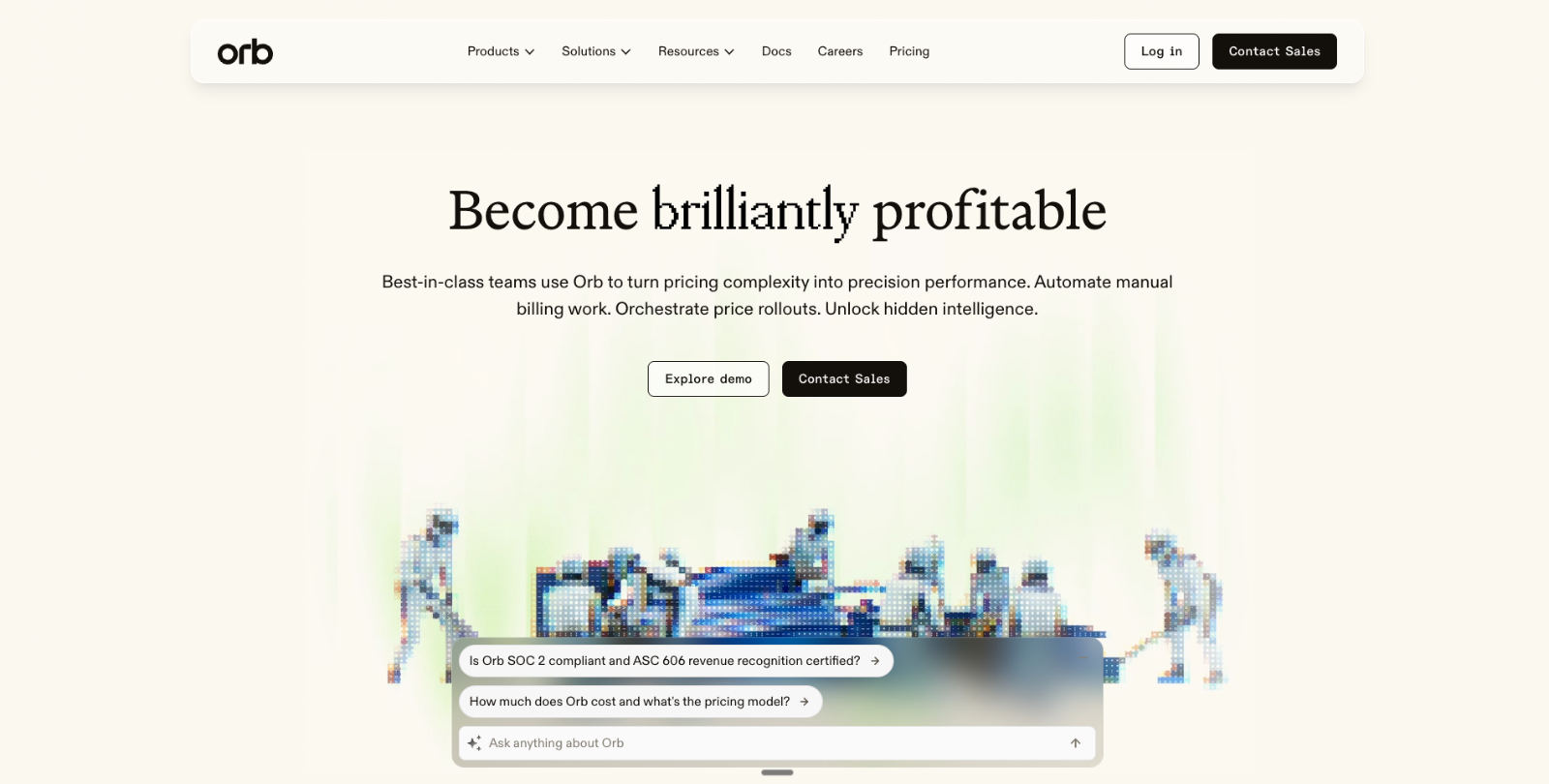
Orb is a usage-based billing platform built specifically for consumption pricing. It handles event ingestion, billing cycle management, and invoice customization with more native flexibility than Stripe.

The gap is on the cost side: Orb tracks what customers owe you but does not give you visibility into what it costs to serve them. For companies primarily looking to fix the billing layer without needing cost and margin tracking, it is worth evaluating.


3. Chargebee
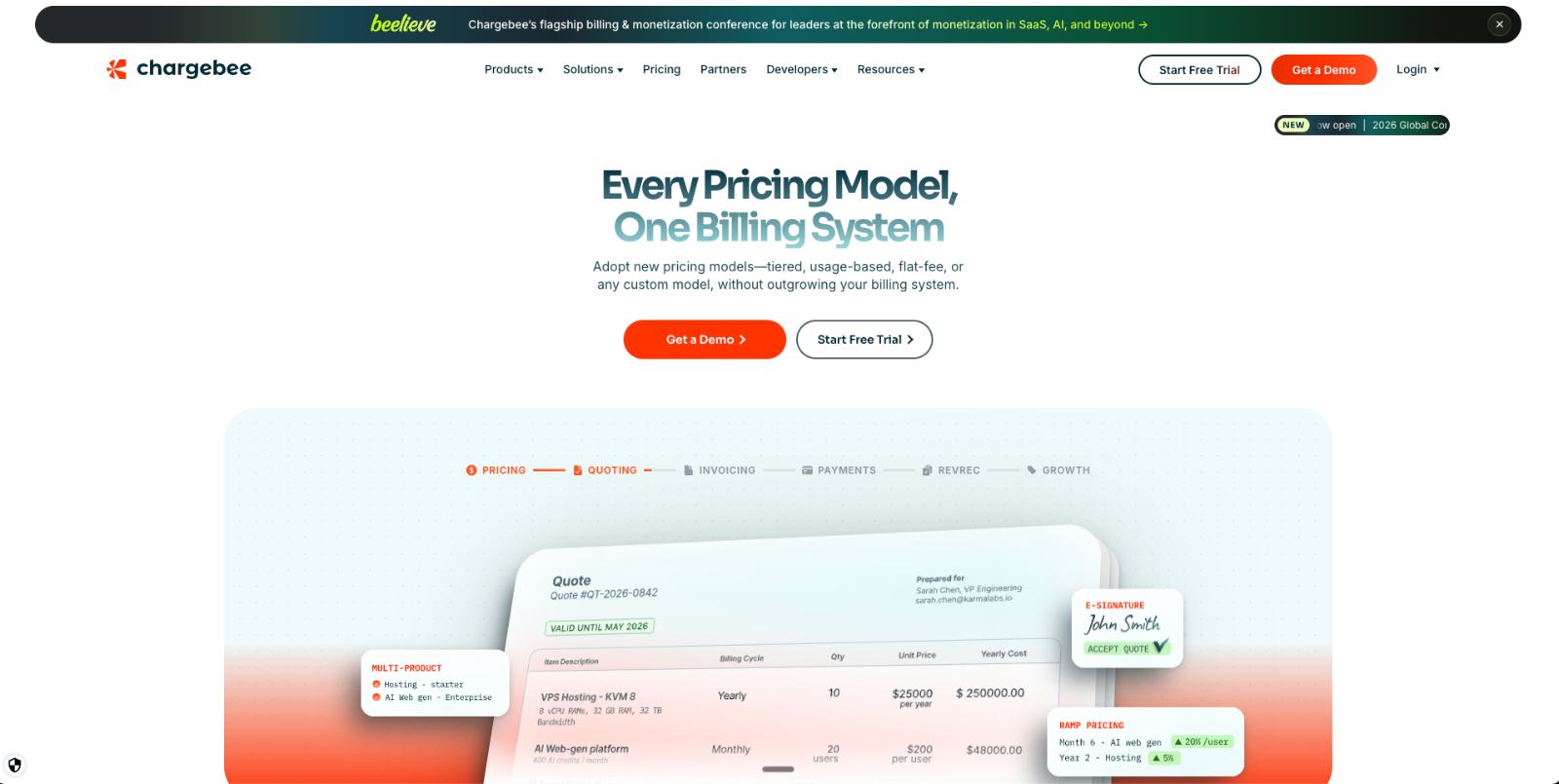

Chargebee solves a different problem than Stripe Billing. Where Stripe handles payments and leaves billing logic thin, Chargebee goes deep on the subscription side: contract management, renewal automation and revenue recognition. If your product is predominantly subscription-based and that operational complexity is what Stripe cannot handle, Chargebee is worth a look.

The honest caveat is that moving from Stripe to Chargebee trades one ceiling for another. You gain subscription depth but lose ground on usage flexibility. Companies with hybrid or consumption-heavy models will hit the edges of what Chargebee can do without significant custom work.


4. m3ter
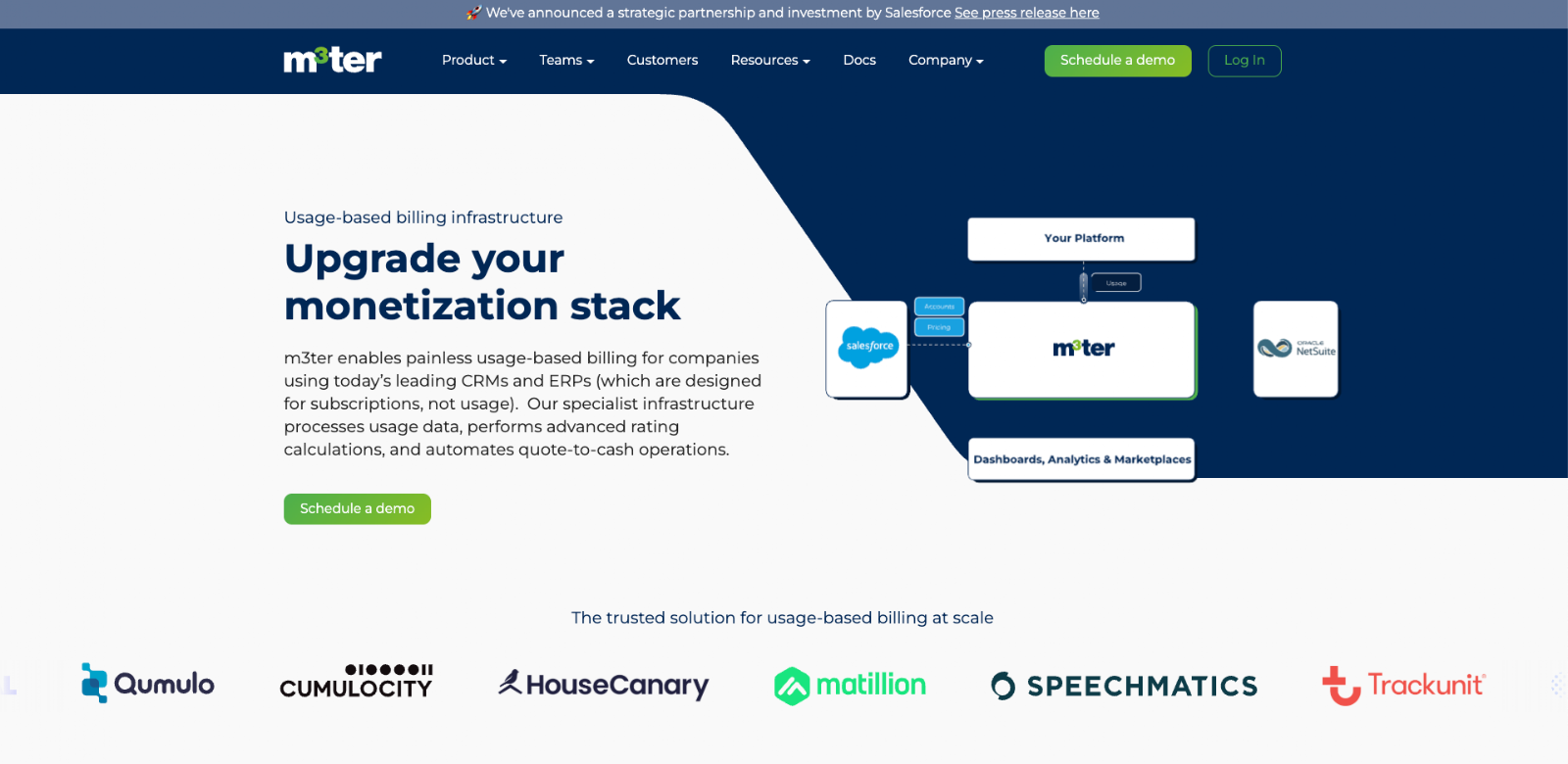
m3ter is a usage-based billing platform built for scale, focused on metering accuracy and handling high volumes of usage data reliably. It is a solid option for infrastructure and developer tooling companies that need a dedicated metering layer and find Stripe Billing too limited for their event volumes.

Like most billing-focused platforms, the cost side of the equation is not addressed. Margin visibility per customer requires additional tooling outside m3ter.

5. Lago
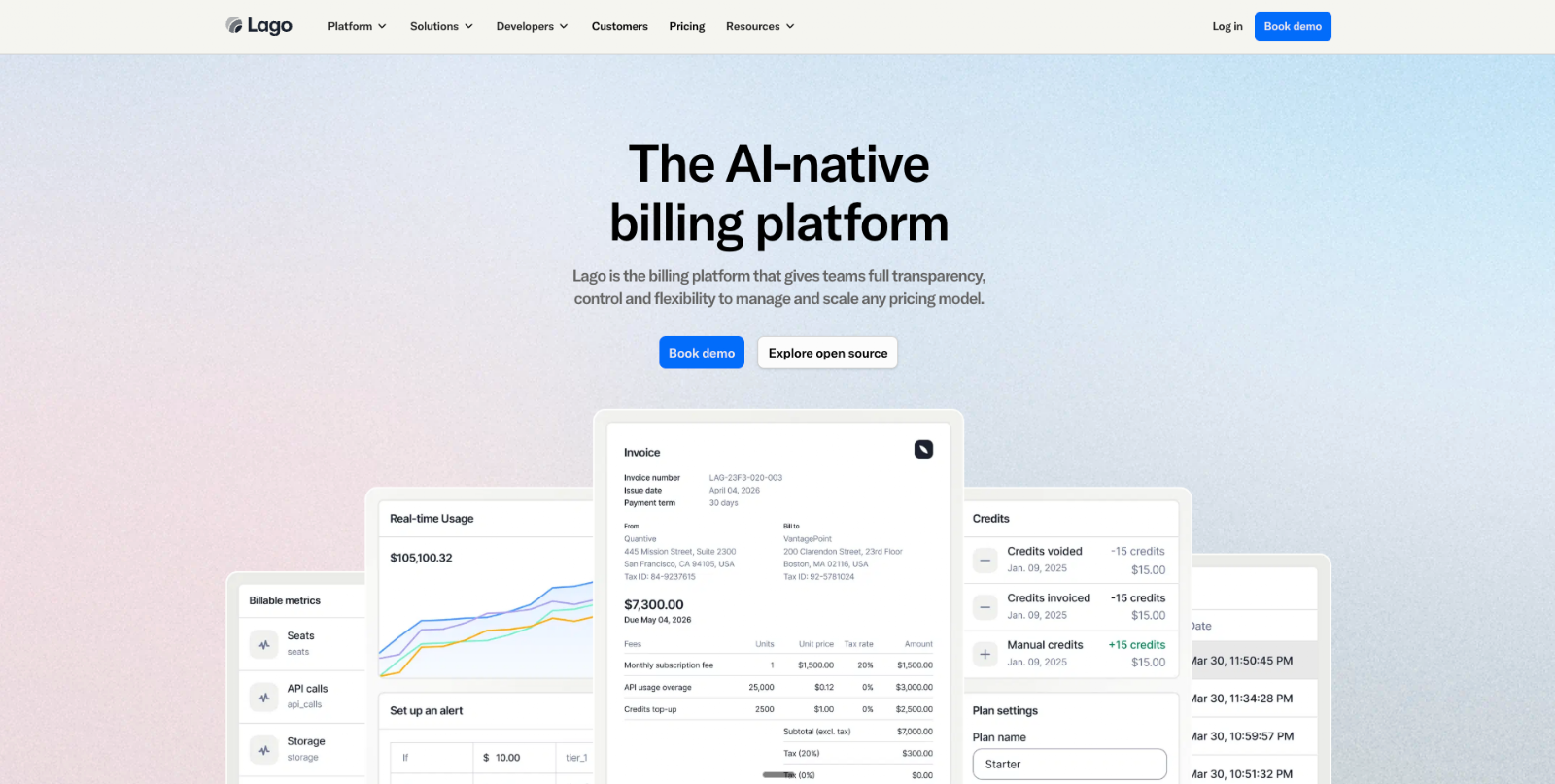

It is an open-source billing platform which gives engineering teams complete ownership of their billing infrastructure. There are no vendor constraints, no pricing tiers, and no black-box logic. For companies with strong engineering capacity and a desire to build rather than buy, it is a legitimate option.

The honest trade-off is that you take on full responsibility for deployment, scaling, and maintenance. For teams that are already stretched, that overhead is not trivial. Cost and margin visibility are also outside Lago's scope.

Which Stripe Billing Alternative Is Right for You?

Most companies outgrow Stripe Billing for one of three reasons: event volume, pricing complexity, or the need to understand unit economics beyond what a payments tool can show you.

If event volume is the bottleneck, the priority is a platform with a dedicated metering layer built to handle high-frequency ingestion reliably. If pricing complexity is the issue, look specifically at how much of your target pricing model is supported natively versus requiring custom configuration or engineering work. If the real gap is financial visibility, the question to ask every vendor is whether they can show you cost and revenue together at the customer level. Most cannot. Stripe Billing certainly cannot. The platforms that close that gap are the ones worth prioritizing for AI products specifically.

Usage Based Billing

5 Stripe Billing Alternatives Worth Evaluating in 2026

April 27, 2026

If you are processing payments, managing subscriptions, or handling simple invoicing, Stripe's ecosystem is hard to beat for getting up and running fast.

But there are a few specific moments when companies start looking for something else. The first is when pricing model complexity outpaces what Stripe Billing can configure without custom engineering. The second is when usage volumes grow to a point where event ingestion and metering need to be a dedicated system, not a layer bolted onto a payments platform. The third, and most common for AI companies, is when you realize you have no idea whether your customers are actually profitable. Stripe tells you what came in. It does not tell you what went out (cost) to serve each customer.

Stripe built the best payments infrastructure in the world. Billing at the complexity that growing AI products need is a fundamentally different problem, and that is not what Stripe set out to solve.

Here are five alternatives worth evaluating when you reach that point.

1. Amberflo

Amberflo is an AI monetization platform, purpose-built for the AI era, converging cost tracking and billing into a single platform. For teams moving off Stripe Billing, the immediate difference is that Amberflo was built around metering first, not payments. Usage data flows directly into billing without custom middleware, reconciliation work, or separate data pipelines. Beyond the infrastructure shift, Amberflo gives you something Stripe never could: visibility into what each customer costs you, not just what they pay. That margin picture, combined with support for pricing models that go well beyond what Stripe Billing can configure natively, is what makes it a meaningful step up rather than just a lateral move.

Orb is a usage-based billing platform built specifically for consumption pricing. It handles event ingestion, billing cycle management, and invoice customization with more native flexibility than Stripe.

The gap is on the cost side: Orb tracks what customers owe you but does not give you visibility into what it costs to serve them. For companies primarily looking to fix the billing layer without needing cost and margin tracking, it is worth evaluating.


3. Chargebee


Chargebee solves a different problem than Stripe Billing. Where Stripe handles payments and leaves billing logic thin, Chargebee goes deep on the subscription side: contract management, renewal automation and revenue recognition. If your product is predominantly subscription-based and that operational complexity is what Stripe cannot handle, Chargebee is worth a look.

The honest caveat is that moving from Stripe to Chargebee trades one ceiling for another. You gain subscription depth but lose ground on usage flexibility. Companies with hybrid or consumption-heavy models will hit the edges of what Chargebee can do without significant custom work.


4. m3ter

m3ter is a usage-based billing platform built for scale, focused on metering accuracy and handling high volumes of usage data reliably. It is a solid option for infrastructure and developer tooling companies that need a dedicated metering layer and find Stripe Billing too limited for their event volumes.

Like most billing-focused platforms, the cost side of the equation is not addressed. Margin visibility per customer requires additional tooling outside m3ter.

5. Lago


It is an open-source billing platform which gives engineering teams complete ownership of their billing infrastructure. There are no vendor constraints, no pricing tiers, and no black-box logic. For companies with strong engineering capacity and a desire to build rather than buy, it is a legitimate option.

The honest trade-off is that you take on full responsibility for deployment, scaling, and maintenance. For teams that are already stretched, that overhead is not trivial. Cost and margin visibility are also outside Lago's scope.

Which Stripe Billing Alternative Is Right for You?

Most companies outgrow Stripe Billing for one of three reasons: event volume, pricing complexity, or the need to understand unit economics beyond what a payments tool can show you.

If event volume is the bottleneck, the priority is a platform with a dedicated metering layer built to handle high-frequency ingestion reliably. If pricing complexity is the issue, look specifically at how much of your target pricing model is supported natively versus requiring custom configuration or engineering work. If the real gap is financial visibility, the question to ask every vendor is whether they can show you cost and revenue together at the customer level. Most cannot. Stripe Billing certainly cannot. The platforms that close that gap are the ones worth prioritizing for AI products specifically.

Subscribe to our Newsletter

AI Optimization and Monetization
Oops! Something went wrong while submitting the form.