Top 5 Orb Alternatives for AI Companies in 2026

April 17, 2026

If you are looking to move away from Orb, you are probably running into one of a few familiar walls. The pricing model you need does not fit cleanly into what Orb supports. Your product has grown more complex and the billing layer has not kept up. Or you have realized that tracking usage and sending invoices is only part of the problem, and Orb leaves the rest, particularly cost visibility and margin tracking, entirely unaddressed.

Orb handles basic usage-based billing reasonably well. For straightforward consumption models, it gets the job done. But AI products create requirements that go beyond what Orb was designed for. Variable token costs, multi-vendor infrastructure, autonomous agent workflows, and dynamic pricing models that need to evolve quickly all push against the edges of what Orb can do. The deeper issue is structural: Orb sits on the billing side of the equation and does not connect to your cost infrastructure. You can track what customers owe you. You cannot track what it costs to serve them. For AI companies, that gap compounds fast.

Here are five alternatives worth evaluating seriously.

1. Amberflo
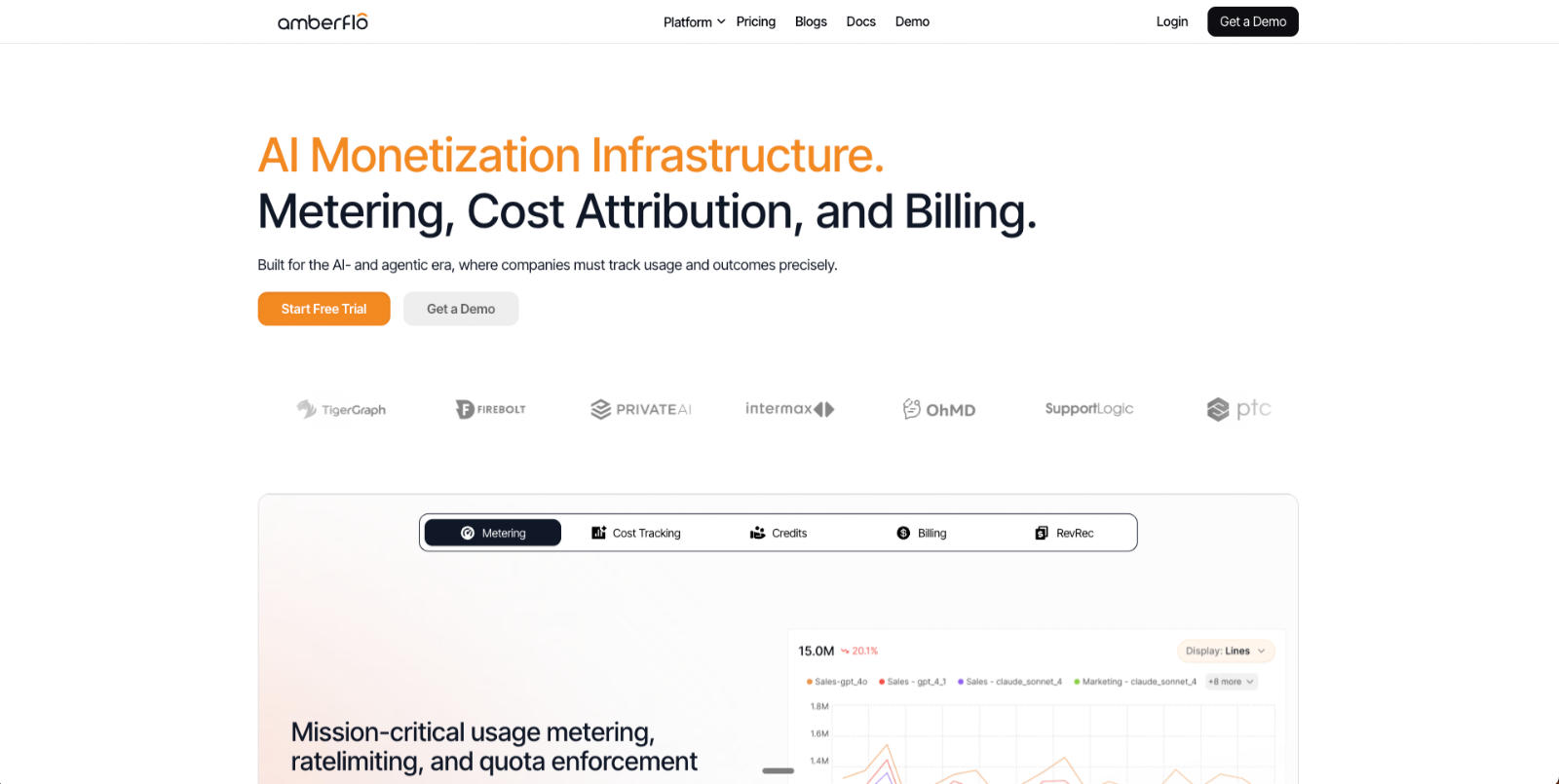

Amberflo is an AI monetization platform for the AI era, converging cost tracking and billing into a single platform.Where Orb handles billing in isolation, Amberflo connects usage to cost to margin to invoice. You get real-time metering at financial-grade accuracy, margin visibility per customer, and support for the full range of AI-native pricing models: usage-based, tiered, credit-based, outcome-based, hybrid, and multi-dimensional. Spend can be attributed across models and vendors, so you always know where cost is concentrating. Pricing is usage-based, tied to event ingestion volume and amounts invoiced.

2. Metronome
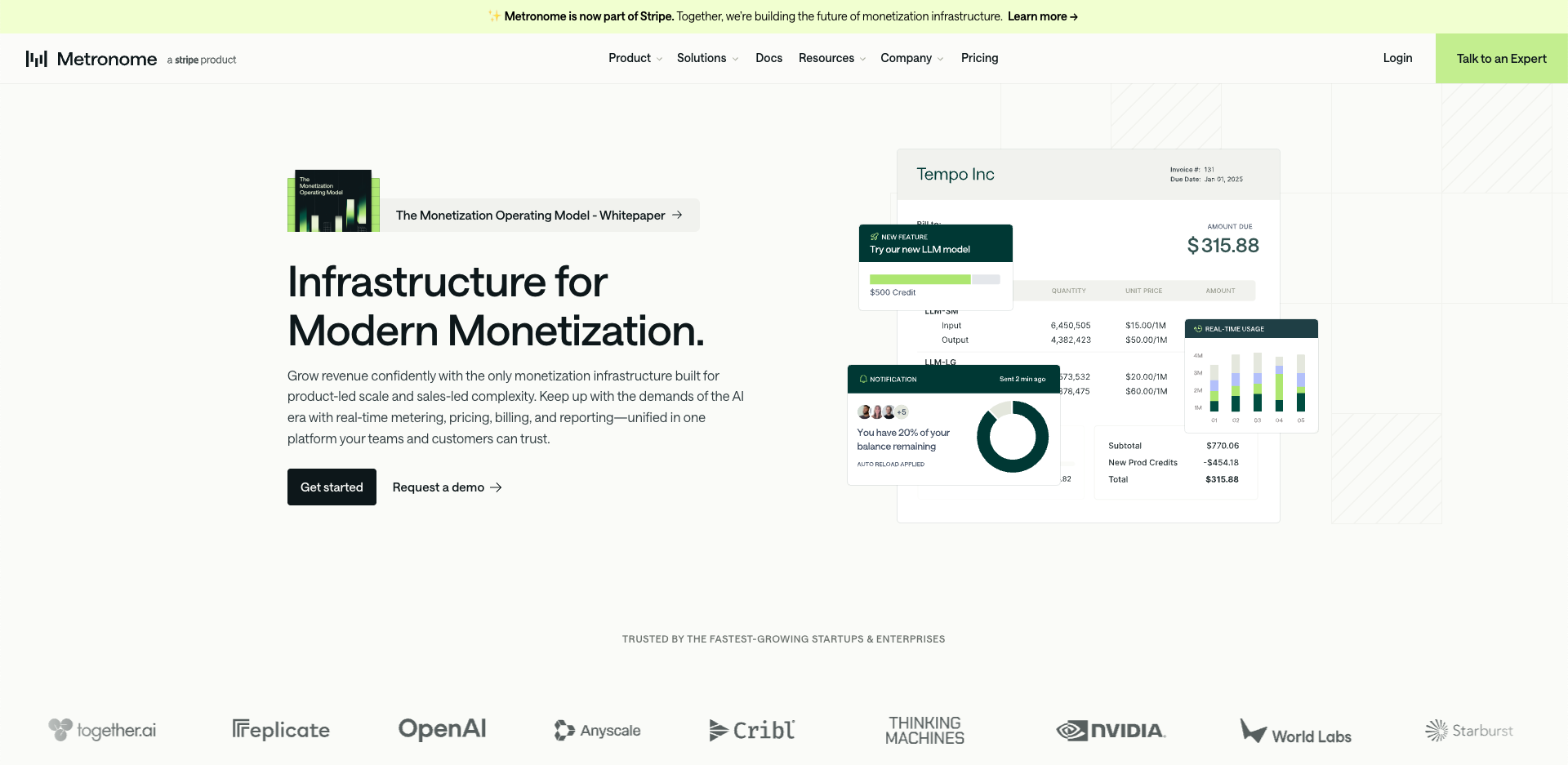

Metronome is a focused usage-based billing platform with strong developer tooling and a clean API. It handles complex event schemas well and works for developer-focused infrastructure products with relatively predictable consumption. The gap for AI companies is the same as Orb: Metronome sits on the billing side and does not address cost. You get accurate invoicing, but no visibility into what it cost to generate that revenue.

3. Chargebee
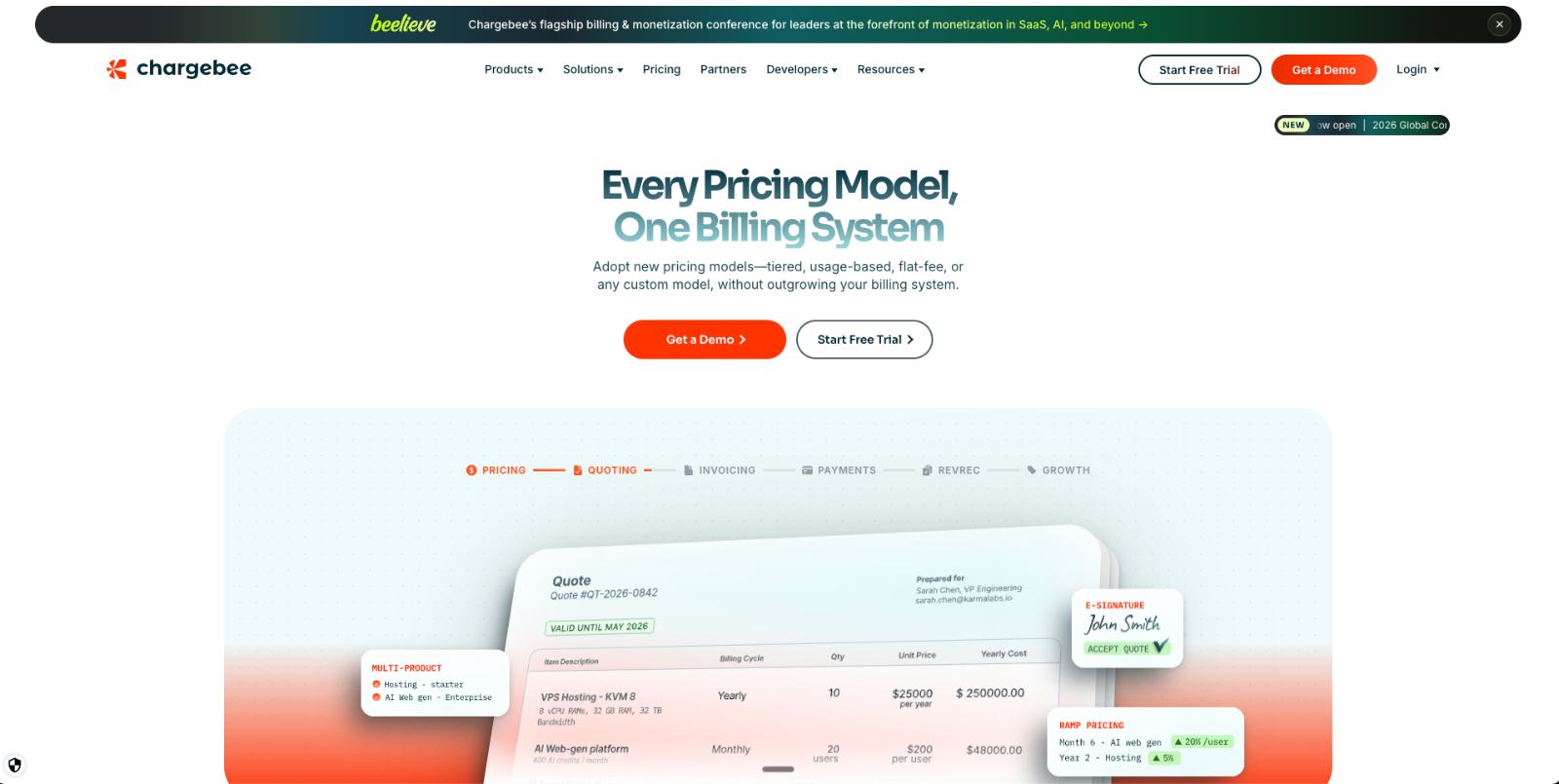

Chargebee is a mature billing platform with strong tooling for subscription management, renewal workflows, and revenue recognition. For products with predominantly subscription-based revenue, it covers the basics well. The limitation for AI companies is that it was built for structured subscription models. Adapting it for high-volume usage metering or dynamic consumption pricing requires custom engineering, and AI cost management is not in scope at all.

4. Stripe Billing
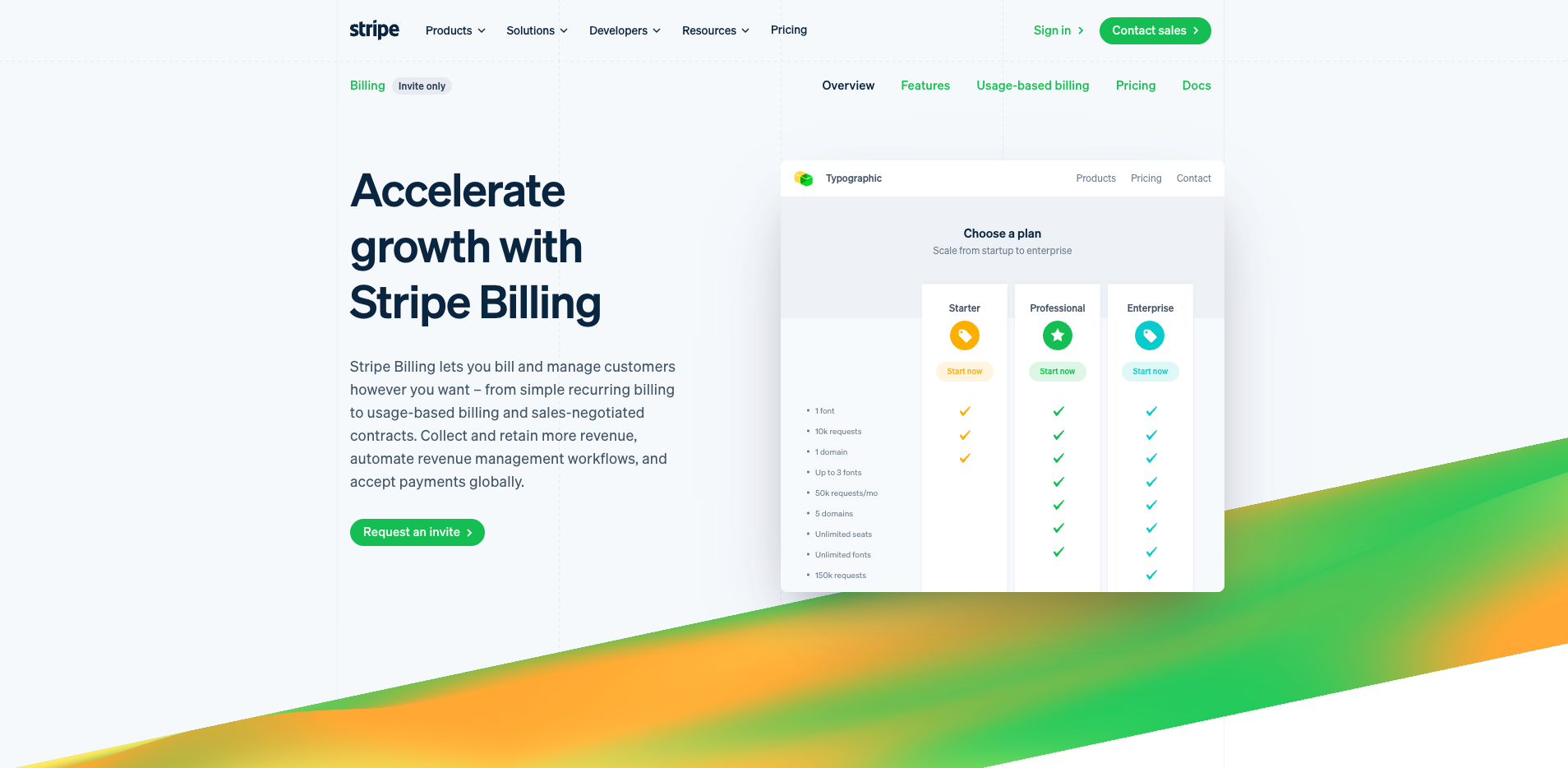
Stripe Billing is the convenient option if you are already using Stripe for payments. It moves fast, integrates cleanly, and works for simple pricing with limited dimensions. The ceiling is low for anything more complex. High-volume event ingestion, multi-dimensional pricing, and real-time cost tracking are outside its design scope. Most AI companies outgrow it quickly and face a costly mid-flight migration.


5. Lago
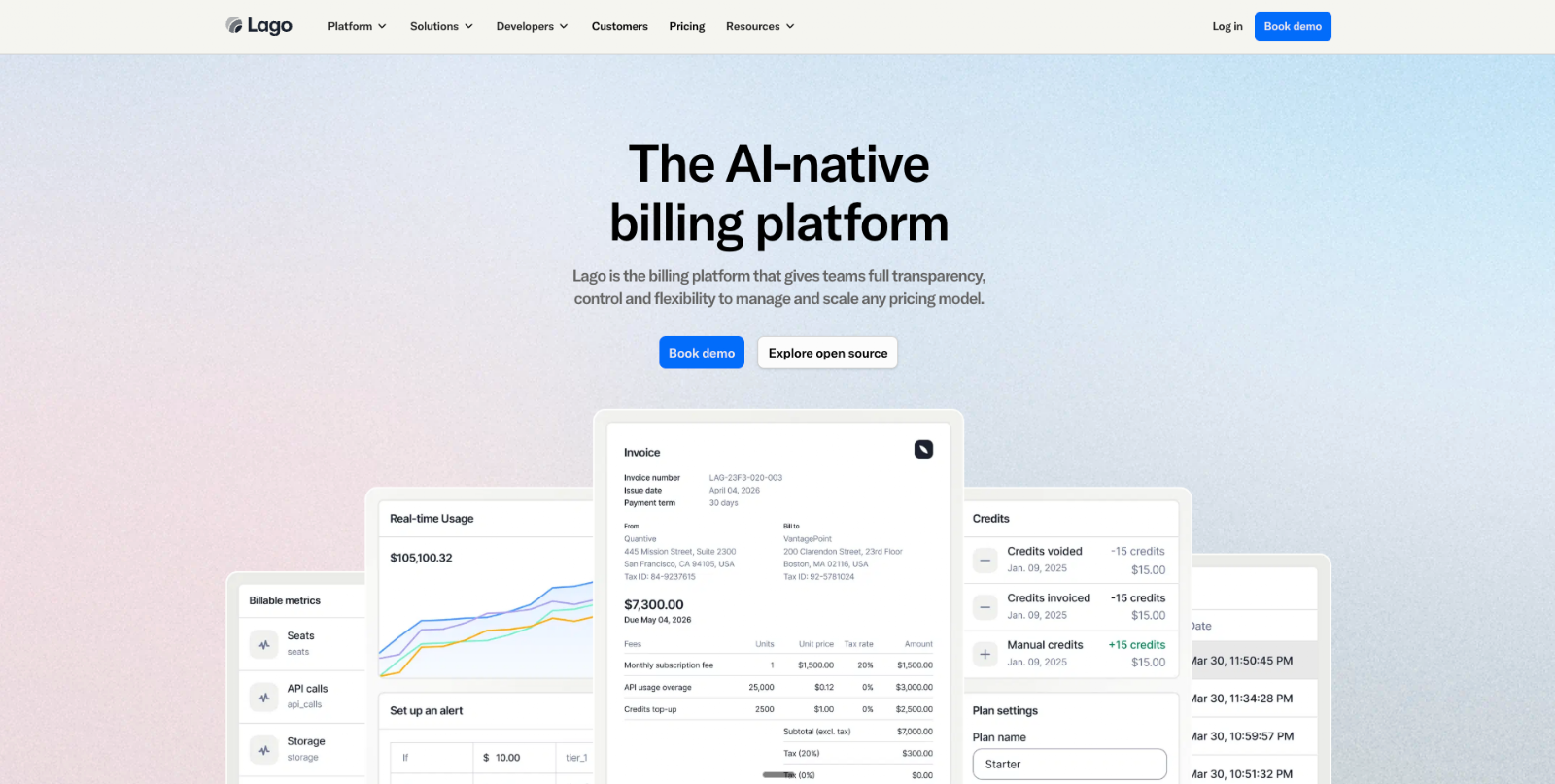
Lago is an open-source billing platform with solid metering primitives and real flexibility for teams that want full control over their billing stack. If you want to self-host and customize deeply, it is a credible option. The trade-off is operational overhead: you own the deployment, maintenance, and scaling. For AI companies moving fast and iterating on pricing frequently, that cost is real. Lago also does not solve the cost and margin visibility problem.


Which Orb Alternative Is Right for You?

Companies looking to switch from Orb typically fall into three different buckets: (1) those who need high volume metering and event schema flexibility, (ii) those who have grown past what Orb's billing model supports, and (iii) those who need to track costs with billing  integrated with the same metering system.

When evaluating alternatives, a few capabilities are worth pressure-testing specifically. How well does the platform handle multi-dimensional metering and pricing, where a single customer is billed across multiple usage dimensions simultaneously? Does it support credit-based and outcome-based models, or only simple consumption billing? Can it also track and attribute cost at the customer level, not just track aggregate costs? And critically for AI products, does it give you margin visibility, the ability to see what a customer costs you alongside what they pay you?

If your primary gap is subscription management and renewal workflows, prioritize platforms with mature billing lifecycle tooling. If you need flexibility for complex usage models without heavy engineering, look for no-code pricing configuration and fast deployment. If you are building an AI product where cost and revenue need to be understood together, make sure the platform you choose treats metering as a financial system of record, not just an analytics layer.

Top 5 Orb Alternatives for AI Companies in 2026

April 17, 2026

If you are looking to move away from Orb, you are probably running into one of a few familiar walls. The pricing model you need does not fit cleanly into what Orb supports. Your product has grown more complex and the billing layer has not kept up. Or you have realized that tracking usage and sending invoices is only part of the problem, and Orb leaves the rest, particularly cost visibility and margin tracking, entirely unaddressed.

Orb handles basic usage-based billing reasonably well. For straightforward consumption models, it gets the job done. But AI products create requirements that go beyond what Orb was designed for. Variable token costs, multi-vendor infrastructure, autonomous agent workflows, and dynamic pricing models that need to evolve quickly all push against the edges of what Orb can do. The deeper issue is structural: Orb sits on the billing side of the equation and does not connect to your cost infrastructure. You can track what customers owe you. You cannot track what it costs to serve them. For AI companies, that gap compounds fast.

Here are five alternatives worth evaluating seriously.

1. Amberflo


Amberflo is an AI monetization platform for the AI era, converging cost tracking and billing into a single platform.Where Orb handles billing in isolation, Amberflo connects usage to cost to margin to invoice. You get real-time metering at financial-grade accuracy, margin visibility per customer, and support for the full range of AI-native pricing models: usage-based, tiered, credit-based, outcome-based, hybrid, and multi-dimensional. Spend can be attributed across models and vendors, so you always know where cost is concentrating. Pricing is usage-based, tied to event ingestion volume and amounts invoiced.

2. Metronome


Metronome is a focused usage-based billing platform with strong developer tooling and a clean API. It handles complex event schemas well and works for developer-focused infrastructure products with relatively predictable consumption. The gap for AI companies is the same as Orb: Metronome sits on the billing side and does not address cost. You get accurate invoicing, but no visibility into what it cost to generate that revenue.

3. Chargebee


Chargebee is a mature billing platform with strong tooling for subscription management, renewal workflows, and revenue recognition. For products with predominantly subscription-based revenue, it covers the basics well. The limitation for AI companies is that it was built for structured subscription models. Adapting it for high-volume usage metering or dynamic consumption pricing requires custom engineering, and AI cost management is not in scope at all.

4. Stripe Billing

Stripe Billing is the convenient option if you are already using Stripe for payments. It moves fast, integrates cleanly, and works for simple pricing with limited dimensions. The ceiling is low for anything more complex. High-volume event ingestion, multi-dimensional pricing, and real-time cost tracking are outside its design scope. Most AI companies outgrow it quickly and face a costly mid-flight migration.


5. Lago

Lago is an open-source billing platform with solid metering primitives and real flexibility for teams that want full control over their billing stack. If you want to self-host and customize deeply, it is a credible option. The trade-off is operational overhead: you own the deployment, maintenance, and scaling. For AI companies moving fast and iterating on pricing frequently, that cost is real. Lago also does not solve the cost and margin visibility problem.


Which Orb Alternative Is Right for You?

Companies looking to switch from Orb typically fall into three different buckets: (1) those who need high volume metering and event schema flexibility, (ii) those who have grown past what Orb's billing model supports, and (iii) those who need to track costs with billing  integrated with the same metering system.

When evaluating alternatives, a few capabilities are worth pressure-testing specifically. How well does the platform handle multi-dimensional metering and pricing, where a single customer is billed across multiple usage dimensions simultaneously? Does it support credit-based and outcome-based models, or only simple consumption billing? Can it also track and attribute cost at the customer level, not just track aggregate costs? And critically for AI products, does it give you margin visibility, the ability to see what a customer costs you alongside what they pay you?

If your primary gap is subscription management and renewal workflows, prioritize platforms with mature billing lifecycle tooling. If you need flexibility for complex usage models without heavy engineering, look for no-code pricing configuration and fast deployment. If you are building an AI product where cost and revenue need to be understood together, make sure the platform you choose treats metering as a financial system of record, not just an analytics layer.

Subscribe to our Newsletter

AI Optimization and Monetization
Oops! Something went wrong while submitting the form.